DISABILITY & RESILIENCE, AND THE FUTURE OF HUMAN POTENTIAL
"BODY AWARENESS - MENTAL HEALTH - EMOTIONAL INTELLIGENCE "
This is more than a website - it’s a movement.
I explore scoliosis, chronic pain, disability, and inclusion through lived experience and neuroscience.
Redefining Disability. Reclaiming Strength. Rewriting the Story.
How is scoliosis diagnosed? Key tests & early signs explained
A general MD or pediatric MD will diagnose scoliosis after a thorough physical exam. Examination typically starts with a visit to a general MD, followed by a referral to an orthopedic spine specialist.
1. PHYSICAL EXAMINATION
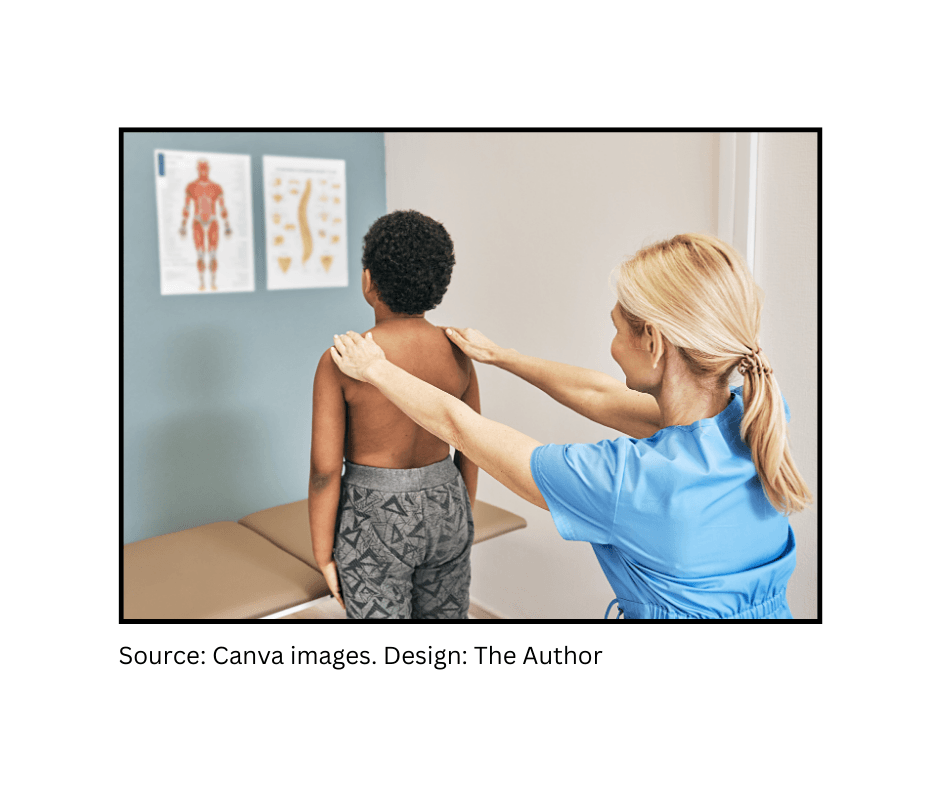
The initial visit involves standing up straight and bending forward to touch your toes. The medical practitioner will check the shape of your spine and observe your movement. They will also test your reflexes and muscle strength to assess your nerve health. Before suggesting a treatment plan, the MD will ask detailed questions about:
Your medical and family medical history
The date when you first noticed a change in your spine or the date of your initial screening
Your current symptoms, if any
Any bowel, bladder, or motor symptoms that could indicate more serious nerve damage or pressure caused by scoliosis
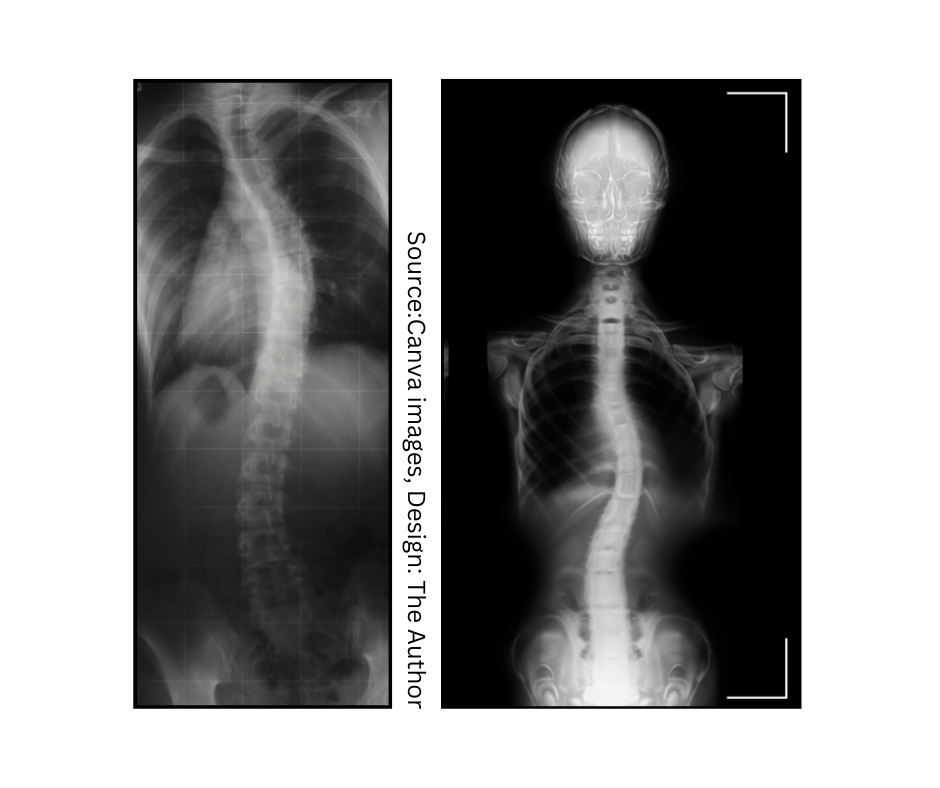
The MD might order X-rays will provide a comprehensive view of your spine from the front and side, allowing the MD to determine if scoliosis is present and its severity.
Other imaging tests, such as MRI (magnetic resonance imaging) or CT (computed tomography) scans, may also be required and mostly it comes from orthopedic spine specialists or neurologist.
2. HOW IS SCOLIOSIS MEASURED
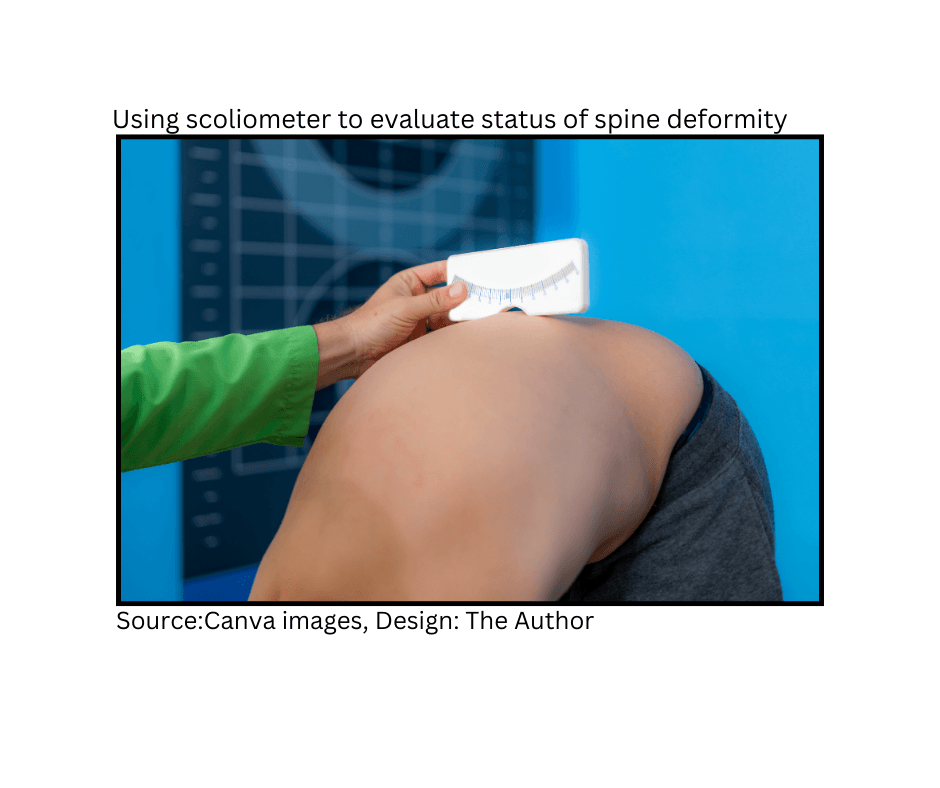
Scoliometer: One of the first thing, after visible evaluation, is measuring the angle with a scoliometer. Imagine it like measuring angles with a protractor back in geometry class. The provider uses a specialized instrument called a scoliometer. Placing this tool on your back, the scoliometer helps determine the curvature of your spine.
Cobb Angle: To assess scoliosis, the Cobb angle is the gold standard.
X-ray images identify the most tilted vertebrae above and below the curve. MD draws lines from the top of the upper vertebra and the bottom of the lower vertebra. These lines intersect at a specific angle, which is measured to determine the severity of the scoliosis.
In other words, a medical professional will assess the curvature of your spine in degrees, determining the severity as follows:
No scoliosis diagnosis: Less than 10 degrees
Mild scoliosis: 10 to 24 degrees
Moderate scoliosis: 25 to 39 degrees
Severe scoliosis: More than 40 degrees
Another method, although less common than the Cobb angle, is the Risser-Ferguson method. This technique involves drawing a line from the center of the top vertebra to the center of the bottom vertebra, and a perpendicular line from this to the center of the curve. The resulting angle provides an alternative measure of the spinal curvature.
Modern techniques such as 3D Imaging and Surface Topography create a 3D model of the spine and provide detailed measurements without the need for X-rays. Surface topography uses light patterns to scan the back and generate a digital map of the spine.
3. SIGNS OF SCOLIOSIS
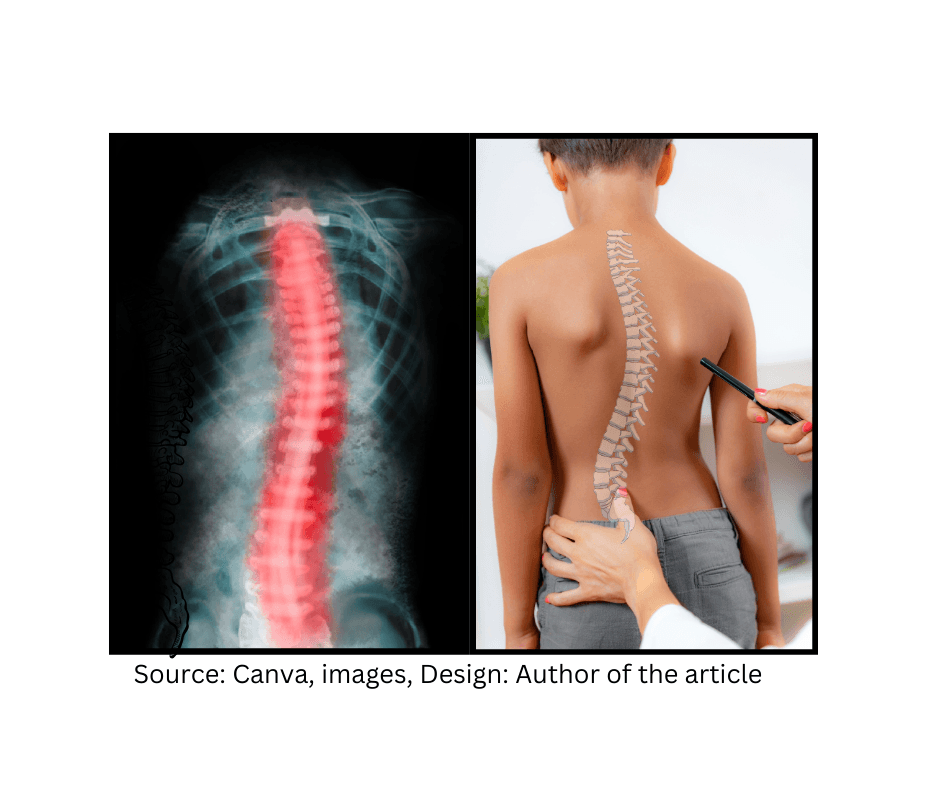
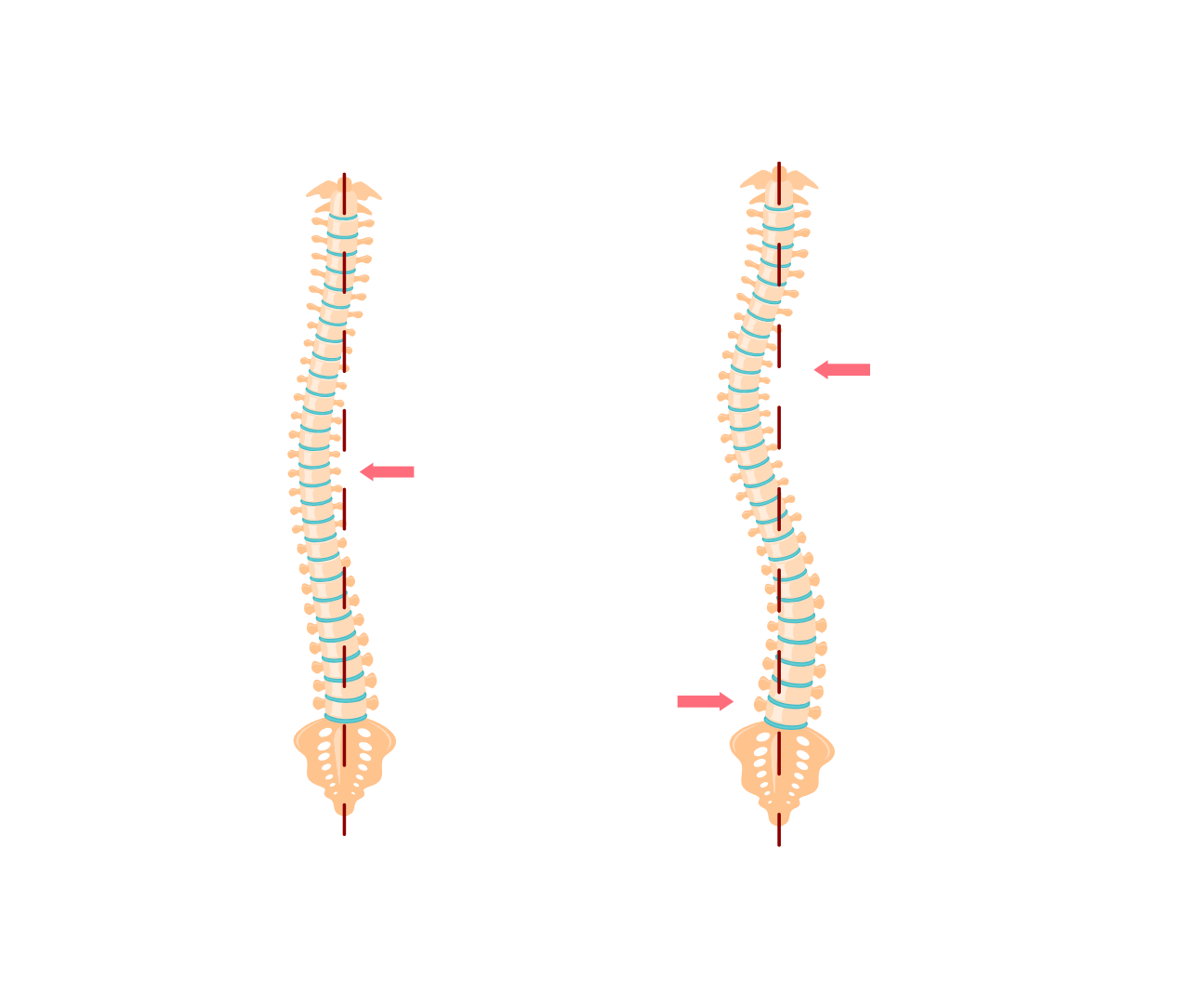
Signs of scoliosis that you probably have noticed already at home and that your MD or pediatrician will also look at, are:
head that doesn't center above your pelvis
uneven shoulders
one shoulder is sticking out
shoulder blades that stick out
one hip is sticking out
uneven waist
constant leaning to one side
uneven alignment of your hips and pelvis
4. SCOLIOSIS TREATMENT
If the MD-Orthopedist recommends a treatment, most likely it is going to be based on the following:
The type of scoliosis
The degree of the curve
The age
The number of growth years until skeletal maturity
Family history of scoliosis, if any
The goal is to decrease symptoms and curve progression and improve the function of your spine. This can be corrected with:
Tailor-made physical therapy to strengthen your core muscles and improve flexibility
Wearing a back brace to support your spine
Correcting any underlying conditions
If for any reason scoliosis doesn’t respond to conservative treatment then your MD may recommend surgery to stabilize the spine and release pressure on nerves.
Better than surgery is early detection and conservative treatment. Scoliosis surgery is a safe procedure, but complications are possible.
5. EARLY DETECTION
According to the National Scoliosis Foundation scoliosis affects 2,3 % of the USA nation, which is around 7 million people. In other article I read 4 people from 100 are affected with scoliosis and the number increased over the years. For some reason, girls are eight times more likely than boys to have a curve that will progress to a magnitude that requires treatment. Idiopathic scoliosis is the most common.
Untreated scoliosis can worsen, leading to chronic back pain, affecting heart and lung function, quality of life, and harming self-esteem.
With early detection and appropriate treatment, individuals diagnosed with scoliosis can lead healthy, active lives.
Whether you’re searching for support, healing insights, or a voice that understands the chronic pain journey-you're in the right place.
Need an expert voice on chronic pain, lifestyle medicine, or nervous system regulation? With over 30 years of experience in healthcare and storytelling, I bring insight, soul, and science to every piece.
📝 Hire Me as Your Health Correspondent
🎙️ Book Me to Speak to Your Audience
🤝 Let’s Collaborate on a Mission-Aligned Project
Susanne van de Munt
Diploma Nurse| Healthcare Consultant | Scoliosis Warrior
Soulful resources shaped by experience, not just theory.


This project is shaped by lived experience and sustained by your support. Every book purchased and service booked contributes to a mission led by a coach living with physical disability. Your support helps amplify a message built from resilience, compassion, and shared healing.
Thank you.
Susanne van de Munt
My mission is simple:
To shift the global mindset from seeing disability as a deficit to recognizing it as a source of innovation, leadership, and human evolution.
The information provided on this website is for educational and informational purposes only and does not constitute medical advice or a substitute for professional healthcare. Individuals are strongly encouraged to consult with a qualified healthcare provider before undertaking any exercise regimen, nutritional changes, or treatment for scoliosis or chronic pain. Proper medical evaluation and guidance are essential to ensure safety and effectiveness.
All rights reserved © 2025 www.scoliosismanagement.com
Susanne van de Munt Dis